
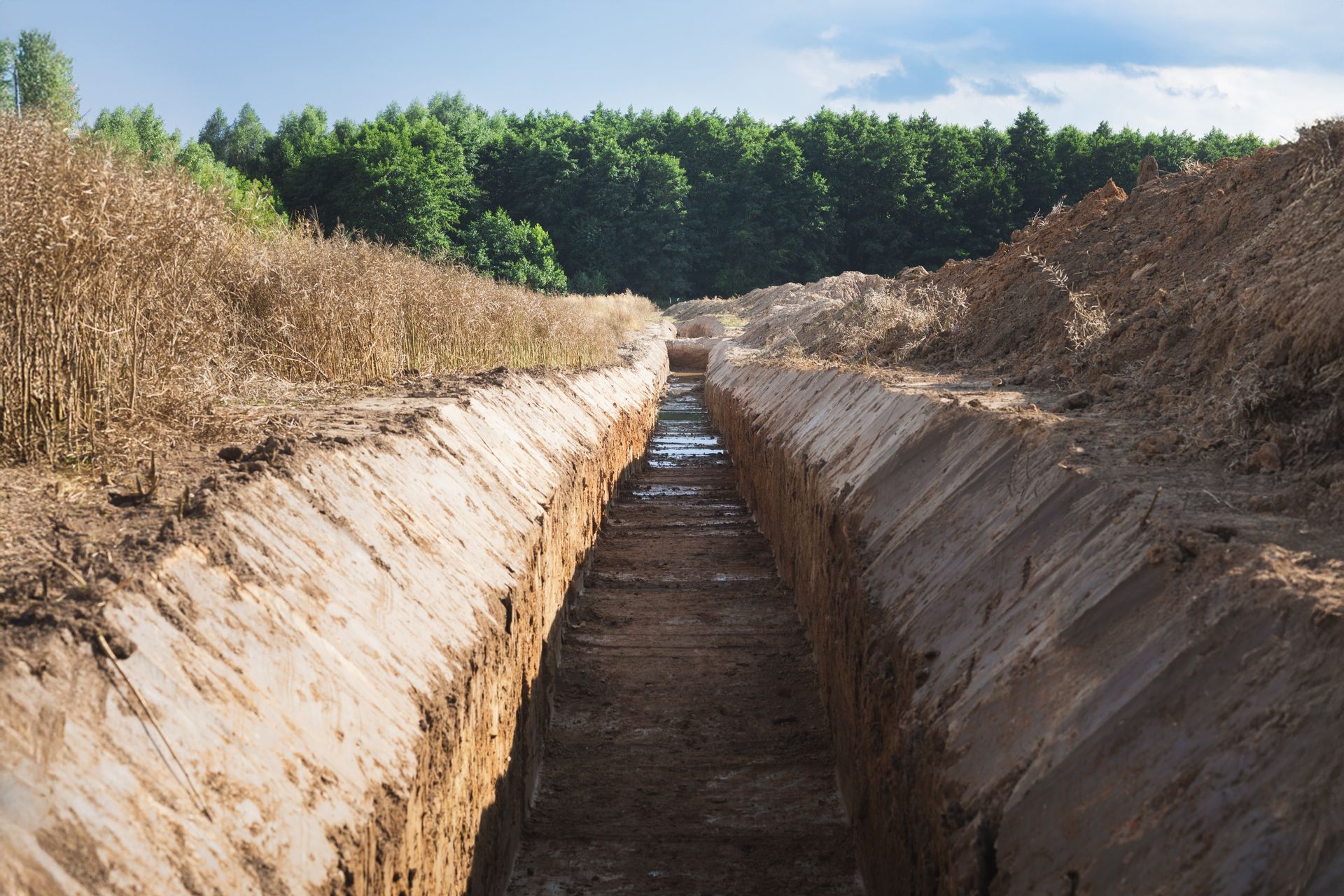
Underground Access Done Without Excess Disturbance
Utility Trenching and Underground Prep in Gainesville for water, sewer, electrical, and infrastructure installations requiring controlled excavation
Installing utilities requires excavating routes from connection points to structures, preparing trenches at depths and widths that accommodate pipe or conduit, and working around existing landscaping, driveways, and site features that can't be disturbed. Black Rock Excavation handles utility trenching and underground preparation in Northeast Georgia, establishing excavation pathways for licensed contractors who perform the actual utility connections. The work involves precision digging across properties where tight residential sites, changing grades, and clay soils affect how trenches are routed, excavated, and backfilled once infrastructure is placed.
Trenching focuses on creating stable excavations at the depths utility codes require, maintaining trench walls that won't collapse before pipe is installed, and routing pathways that avoid crossing mature tree root zones or undermining existing pavement. Operators adjust trench width based on pipe diameter and whether the installation requires bedding stone beneath the utility line, and they establish bottom grades that allow gravity flow for sewer or drainage connections.
Request a trenching estimate to review routing options and discuss how excavation will proceed given your property's layout and soil conditions.
How Trenching Routes Are Established and Executed
Utility excavation begins after existing lines are marked and the route is walked to identify obstacles such as irrigation systems, buried downspouts, or rock outcroppings that affect trench placement. Trenches are excavated to specified depths, with bottom elevations verified using laser levels on longer runs where even slight grade errors prevent proper drainage or flow. Clay soils in Gainesville hold trench walls effectively when dry but require shoring or sloped sides when groundwater seepage or recent rainfall saturates the excavation.
After utility contractors install pipe or conduit, you notice trenches backfilled with soil compacted in lifts to prevent settling that would create surface depressions over the utility route. Driveways crossed by trenches are restored to original elevations with compacted base material beneath pavement, and lawn areas are graded flush with surrounding terrain so topsoil and seed can reestablish grass. The underground infrastructure is protected at proper depth, and surface conditions return to pre-construction appearance once backfill settles and vegetation fills in.
Trenching projects include coordinating excavation timing with utility contractors so trenches remain open only as long as necessary, reducing safety hazards and weather exposure that can destabilize excavation walls. Routes are chosen to minimize the number of mature trees affected, and hand digging supplements machine excavation where roots or unmarked lines require careful exposure rather than mechanical removal.
Questions Before Starting Your Project
Trenching projects depend on utility type, depth requirements, soil conditions, and site-specific obstacles that affect routing and excavation methods.
What determines trench depth for different utility types?
Water lines typically run below frost depth to prevent freezing, sewer lines follow grades that maintain gravity flow toward the connection point, and electrical conduit depth is governed by code requirements based on voltage and whether the route crosses driveways or lawn areas.
How does North Georgia clay affect trenching and backfill procedures?
Clay excavates cleanly in dry conditions but becomes sticky and difficult to compact when wet, requiring operators to monitor soil moisture and sometimes import granular material for backfill when clay won't achieve necessary compaction.
What preparation occurs before trenching begins on a residential property?
Utility locates are verified, property access gates are measured to confirm equipment fit, and the route is marked to show where trenches will run relative to landscaping, pavement, and structures.
When does rock excavation become necessary during trenching in Gainesville?
North Georgia properties occasionally encounter rock layers or large boulders that require hammering or removal, particularly on sites where bedrock sits close to the surface or where previous grading didn't fully clear subsurface stone.
What happens to excess soil excavated during utility trenching?
Soil volume expands when excavated, so material not needed for backfill is either spread across the property to raise low areas or hauled off-site, depending on how much excess exists and whether the property has space for redistribution.
Black Rock Excavation prepares trench routes and underground excavation areas for utility contractors, working through site-specific constraints to establish pathways that protect existing improvements while meeting depth and access requirements. Contact us to discuss trenching scope and site conditions at (770) 654-8738.