
Addressing Runoff Before It Damages Property
Drainage and Stormwater Management in Gainesville for standing water, erosion, washouts, and poorly controlled surface flow
Standing water along driveways, soil washing down slopes after storms, and saturated yard areas signal that stormwater isn't moving off the property as terrain and soil conditions intended. Black Rock Excavation installs drainage solutions in Gainesville where North Georgia's rainfall, clay-heavy soils, and changing elevations create runoff that pools, erodes access routes, or destabilizes yard slopes. The work redirects surface flow through grading corrections, subsurface drainage pathways, and stormwater structures that move water away from vulnerable areas before it causes recurring damage.
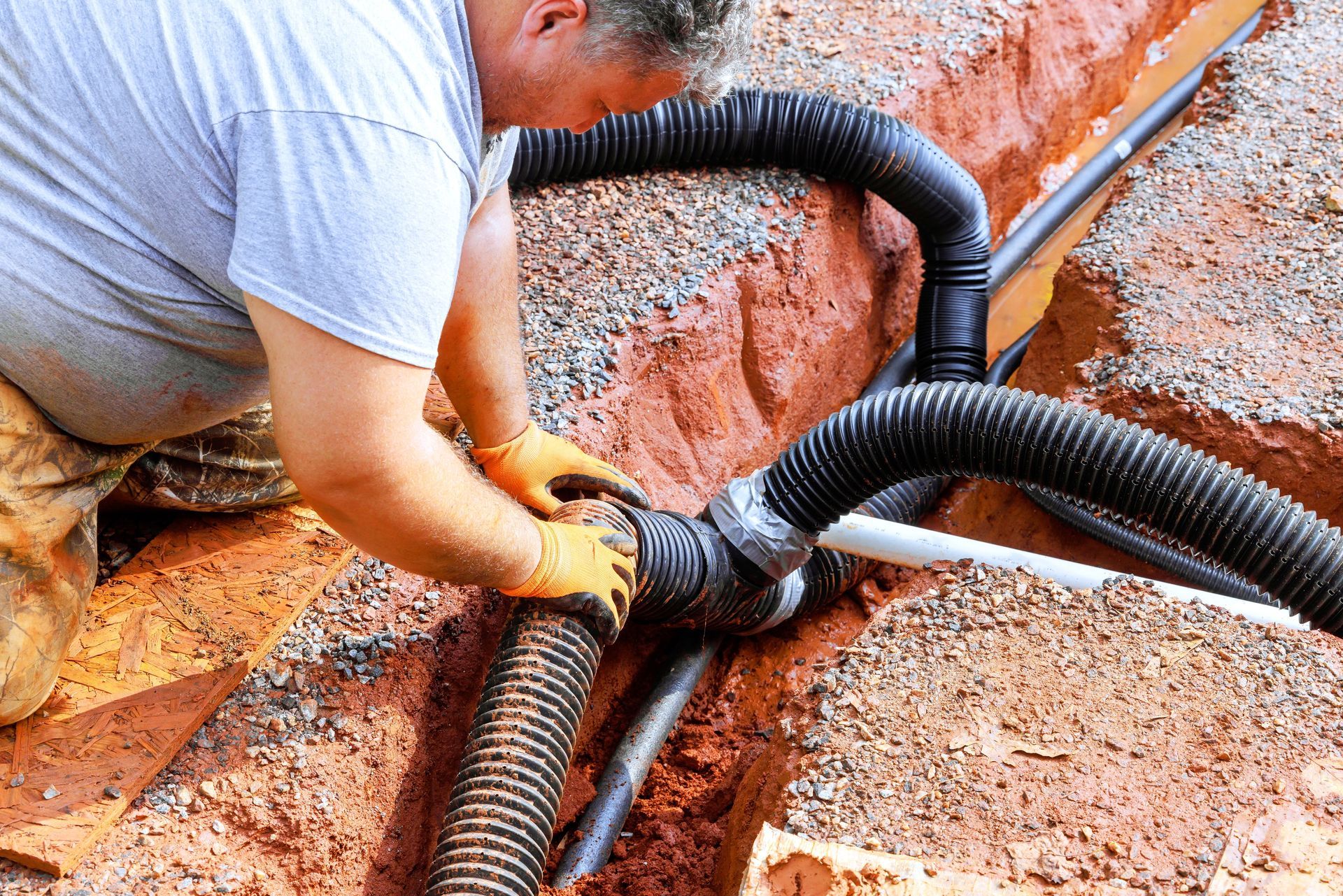
Drainage installations address the specific failure pattern on each property, whether that involves intercepting hillside runoff before it reaches a foundation, collecting water from low yard areas where clay prevents percolation, or replacing undersized culverts that overflow during heavy rain events. French drains capture subsurface water through perforated pipe surrounded by graded stone, grading corrections reshape slopes to establish positive flow away from structures, and drainage pathways channel surface runoff toward safe discharge points.
Request a drainage assessment to identify where water collects and how site conditions contribute to recurring stormwater problems.
What Proper Drainage Accomplishes Over Time
Drainage work begins by identifying where water enters the property, where it accumulates, and where it needs to discharge without causing erosion downstream. Black Rock Excavation excavates trenches for subsurface drains, establishes outlet grades that maintain flow during low-slope conditions, and sizes pipe diameters based on the volume of water the system must handle during North Georgia's intense summer thunderstorms.
After installation, you notice driveways that dry within hours instead of days, yard areas where grass grows instead of mud persisting through wet seasons, and slopes that hold soil rather than washing out after each significant rain. Water moves visibly through the intended pathways during storms, and previously saturated ground firms up as subsurface moisture drains into the collection system. The property sheds rainfall as the terrain's natural slope intended, without concentration points that create erosion channels or standing pools.
Effective drainage design accounts for seasonal water table fluctuations in clay soils, where ground saturation affects how quickly subsurface systems can move water. Installations include cleanout access points where debris can be removed without excavating the entire drain line, and outlet locations are positioned to prevent transferring erosion problems from one area of the property to another.
Answers to Frequent Service Questions
North Georgia's rolling terrain and clay soils create specific drainage challenges that vary by property slope, soil composition, and how stormwater enters each site.
What causes drainage problems on sloped properties in Northeast Georgia?
Clay-heavy soils prevent rainfall from percolating downward, forcing water to travel across the surface and concentrate in low areas, driveways, or against structures where it pools and saturates the ground.
How does a French drain function differently than surface grading?
Surface grading redirects visible runoff by reshaping slopes, while French drains intercept subsurface water and groundwater seepage through perforated pipe bedded in stone, capturing moisture before it surfaces as standing water or soil saturation.
When should culverts be replaced instead of supplemented?
Replacement becomes necessary when existing culverts are undersized for the watershed they serve, positioned at incorrect grades that prevent flow, or deteriorated to the point where structural failure is imminent during the next significant storm.
What determines where drainage outlets discharge water?
Outlets must direct flow toward natural drainage corridors, roadside ditches, or areas where additional water won't cause erosion, flooding, or legal disputes with neighboring properties downstream.
How long does properly installed drainage continue functioning?
Systems maintain flow as long as inlet grates remain clear of debris, pipe grades weren't altered by soil settling, and outlets stay free of vegetation or silt accumulation that restricts discharge.
Black Rock Excavation evaluates how water moves across your property during wet conditions and designs drainage solutions that address the specific failure patterns affecting yards, driveways, and access areas. Arrange a property walkthrough to review stormwater concerns at (770) 654-8738.